
Multi-stage Characterization of Metal Parts Produced by Material Extrusion Additive Manufacturing (CAFAMEX)
Abstract
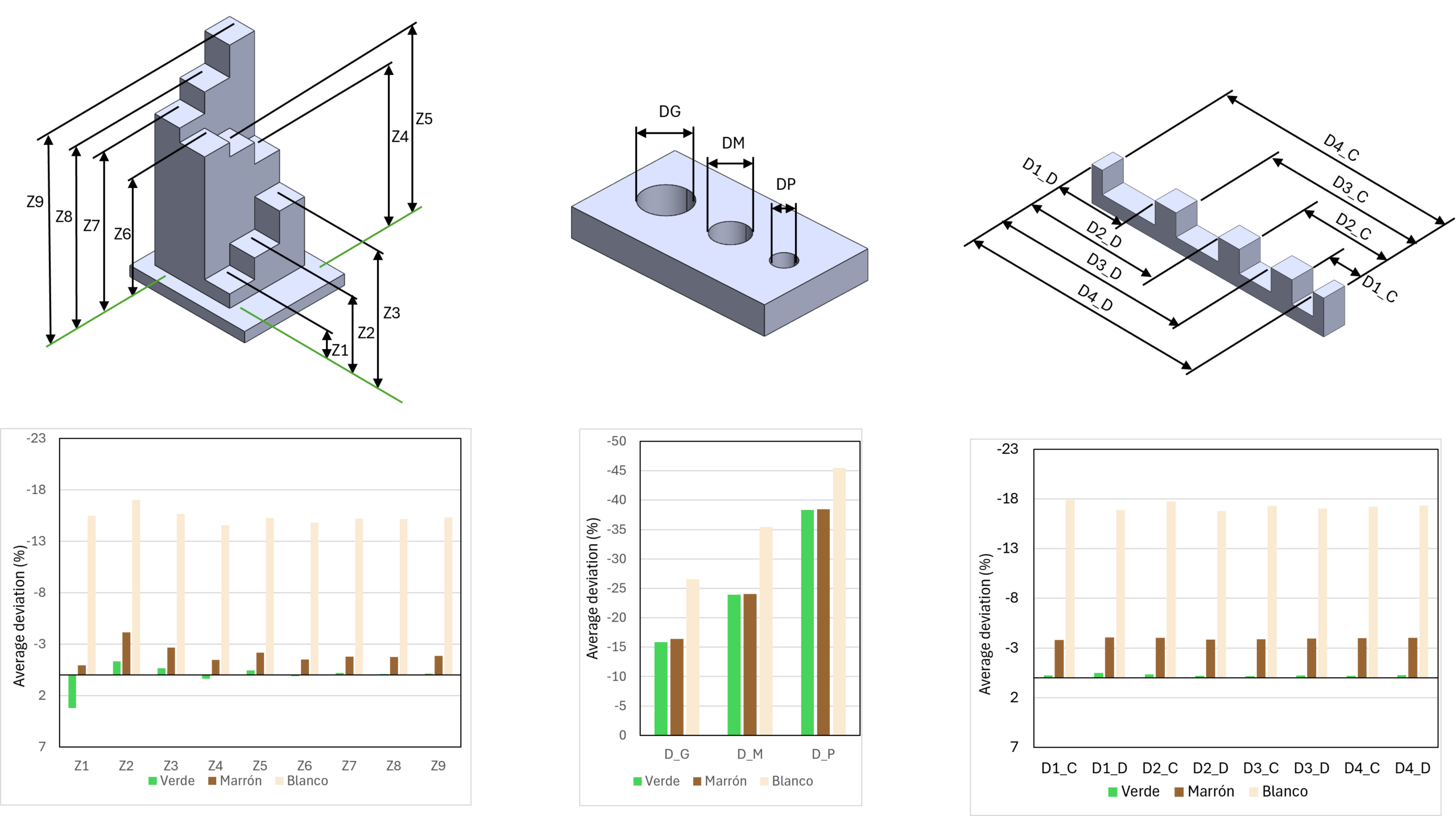
The CAFAMEX project investigates the additive manufacturing of metal components using material extrusion of a thermoplastic feedstock loaded with metal particles (MEX-TRB/M). This technology enables the production of metal parts using equipment that is less costly and less complex than that required by other metal additive manufacturing processes. The project aims to systematically characterize the dimensional, geometric and surface quality of the parts and analyse how their characteristics evolve throughout the different manufacturing stages. To this end, 316L stainless steel is used, and three stages of the parts are studied: the green state, after 3D printing; the brown state, after debinding; and the white state, after sintering. The research is carried out in two phases. In the first phase, standardized test geometries are selected and adapted, then manufactured and characterized at each stage of the process.
The resulting data make it possible to quantify dimensional and geometric changes, assess surface finish and identify the technology’s main limitations. In the second phase, a geometrically more complex artefact is designed and manufactured to evaluate process performance under conditions more closely aligned with industrial requirements. The experimental work combines additive manufacturing equipment, chemical and thermal treatments, and precision metrology systems, and is carried out in collaboration with IDONIAL Technology Centre. The project results contribute to a better understanding of the achievable accuracy and quality of MEX-TRB/M, as well as the influence of the different post-processing stages on the characteristics of the final parts. This information is valuable for process optimization, reducing the uncertainty associated with its use and facilitating its transfer to industry.
The knowledge generated may be particularly relevant to the metalworking and advanced manufacturing industries, as well as to sectors such as automotive, medical and aerospace and, more generally, to the production of customized components, short production runs and spare parts. Furthermore, the lower cost and complexity of this technology compared with other metal additive manufacturing processes may facilitate its adoption by SMEs, technology centres and research groups, broadening access to the additive manufacturing of metal components.
Project data
Funding entity:
Instituto Universitario de Tecnología Industrial (IUTA)
Reference:
SV-26-GIJON-1-06
Principal Invest.:
P. Zapico
Researchers:
B.J. Álvarez, P. Fernández, A. Fernández, F. Peña, M. Velasco, G. Valiño
Start date:
01/06/2026
End date:
31/12/2026
Budget:
4,195 €


