Natalia Beltrán Delgado
Associate Lecturer
+34 985182444
ORCID code: 0000-0002-5780-5294
Short CV
Natalia Beltrán obtained an MSc in Industrial Engineering and a PhD from the University of Oviedo in 2000 and 2021, respectively. She joined the University of Oviedo in 2008 as an Associate Professor in the area of Engineering of Manufacturing Processes. Her research focuses on manufacturing process planning and automation, as well as on the application and integration of non-contact inspection and digitising technologies into different types of production equipment, including additive manufacturing systems. Since 2000, she has participated in numerous publicly and privately funded research projects.
Conference
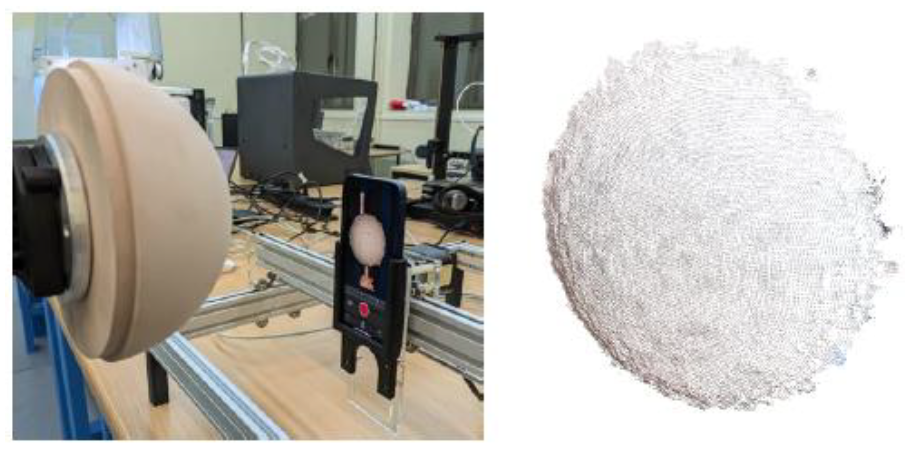
Abstract This study evaluates the geometric accuracy of point clouds acquired with Apple’s TrueDepth sensor, focusing on the influence of sensor-to-object distance. Tests were conducted using Necuron 651 polyurethane specimens featuring a flat surface, two parallel planes, and a hemisphere. A semi-automated test bench enabled digitization at different stand-off distances. [...]
Private Funding Project
Abstract: In this project, EPMAN conducted an in-depth analysis of AEGIS’s reverse engineering requirements. AEGIS manages a significant number of modification projects involving in-service train fleets, often with limited or outdated design information and little involvement from the original manufacturer. Based on this analysis, EPMAN reviewed the state of the [...]
Private Funding Project
Abstract In this project, EPMAN provided technical assistance for the operation of FabLab Asturias, a laboratory belonging to the global Fab Lab network dedicated to digital fabrication. The support involved maintaining a continuous presence of qualified technical staff at the facilities to supervise and carry out routine tasks such as [...]
Private Funding Project
Abstract In this project, EPMAN provided consulting and technical assistance to Laboral Centro de Arte y Creación Industrial in the field of artistic and industrial creation. The work involved analyzing the needs identified by resident and visiting artists, as well as by the center itself, and providing tailored technical advice [...]
Public Funding Project
Abstract In this project, the EPMAN group developed an extrusion head optimized for the additive manufacturing of metal/polymer composite filaments (MEX/M), addressing three critical aspects of the process: filament feeding, heating of the liquefaction chamber, and the geometric limitations of conventional nozzles. Alternative prototypes were designed and evaluated for each [...]

Public Funding Project
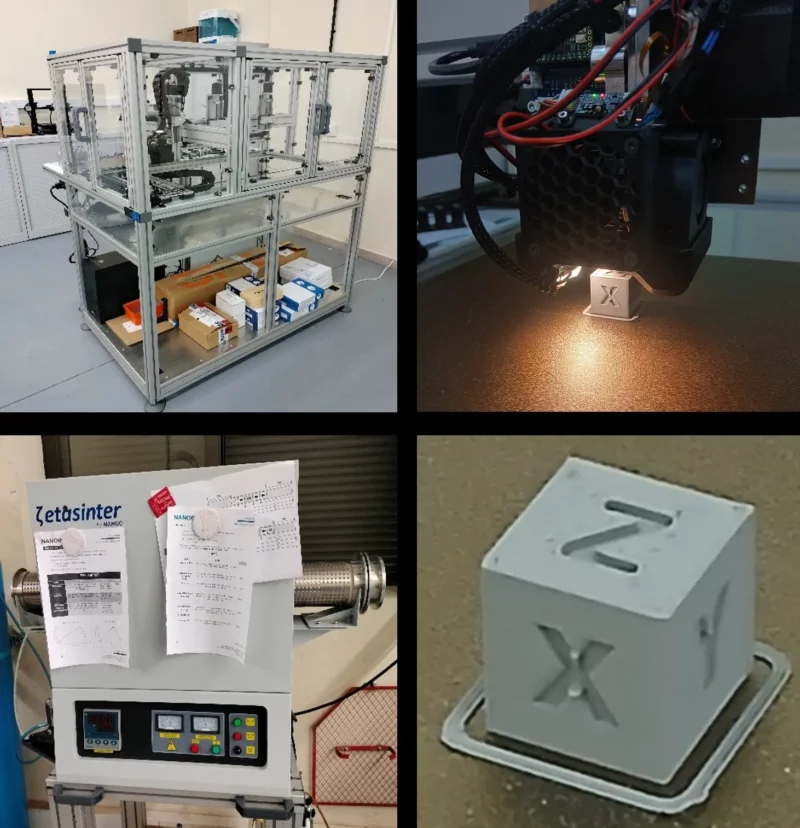
Abstract The project aims to develop and optimize the additive manufacturing of metal parts using Metal Extrusion (MEX/M) as an alternative to conventional metal powder-based technologies, with the goal of reducing costs, energy consumption, and the risks associated with the handling of raw materials. The process uses filaments composed of [...]
Public Funding Project
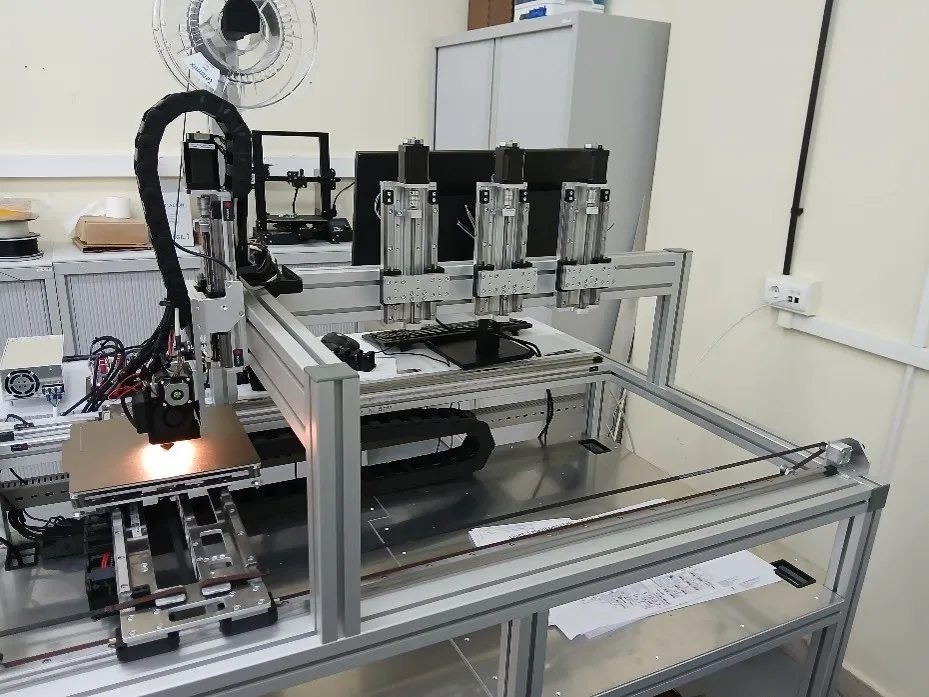
Abstract The processes utilized for Additive Manufacturing (AM) production of metallic parts usually entail the use of hazardous feedstocks, expensive production equipment, and high energy consumption. Metal Material Extrusion AM (MEX/M) presents an alternative multi-step approach that addresses these challenges by additively extruding polymer-metal composite filaments, constructing a green part. [...]
Journal
Abstract Material Extrusion (MEX) currently stands as the most widespread Additive Manufacturing (AM) process, but part quality deficiencies remain a barrier to its generalized industrial adoption. Quality control in MEX is a complex task as extrusion performance impacts the consistency of mechanical properties and the surface finish, dimensional accuracy, and [...]
Conference
Abstract This study investigates the feasibility of processing blends of spherical virgin polyethylene terephthalate glycol (PETG) pellets and recycled polyethylene terephthalate (rPET) flakes. The recycled material was obtained from discarded water bottles collected and processed locally. Tensile and flexural specimens were manufactured using different rPET flake sizes and four material [...]
PhD Thesis
Abstract Additive manufacturing has undergone a rapid development in recent decades, evolving from prototyping and individual part fabrication to fabrication of functional components and serial production. The progressive reduction of the cost per unit has transformed additive manufacturing into a viable alternative to conventional processes for certain applications. However, the [...]
Degree Thesis
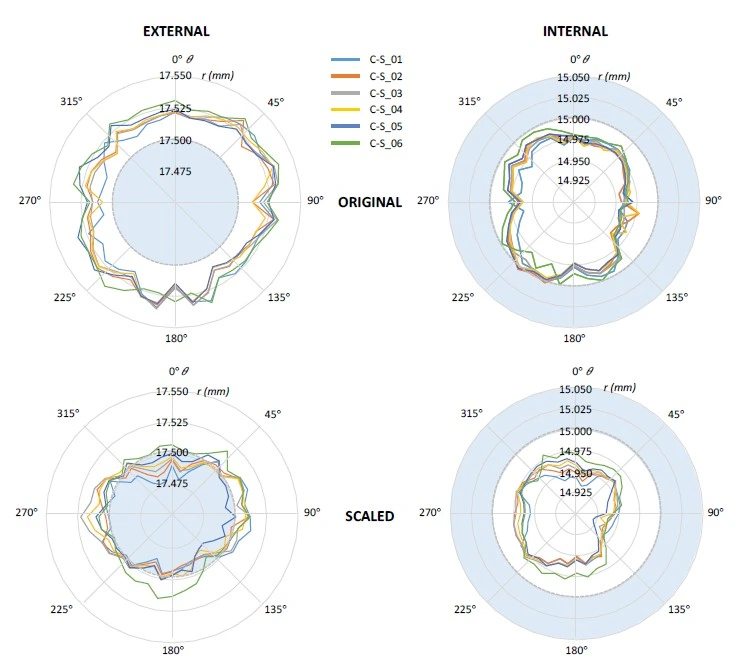
Abstract This project analyses the dimensional accuracy of parts manufactured using material extrusion (MEX) and investigates improvements achieved by compensating for the original geometry. It focuses on cylindrical surfaces, one of the few geometries for which tolerance specifications can be established under ISO 286-1, in a series-production scenario that justifies [...]
Master Thesis
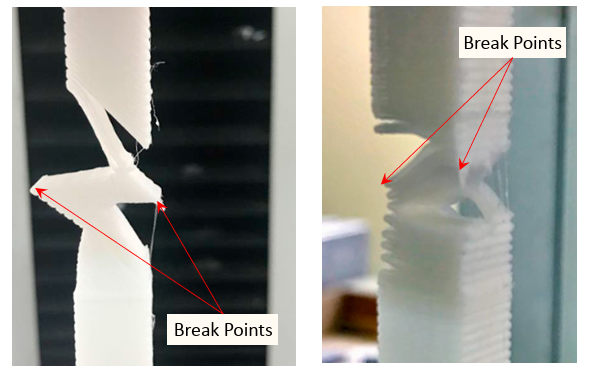
Abstract This project lays the foundations for a high-productivity extrusion head and investigates a new one-piece head concept incorporating heat dissipation and heating mechanisms that differ from conventional designs. The work follows three research lines aimed at reducing manufacturing time: the influence of nozzle geometry, the thermal profile and heat [...]
Conference
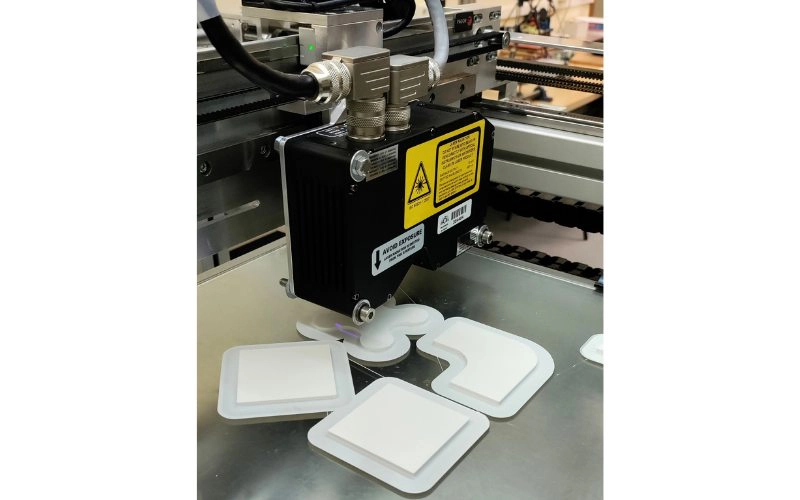
Abstract Fused Filament Fabrication (FFF) is a popular additive manufacturing process where parts are built as a superposition of flat layers of material. The nature of this process allows for the use of more than one extruder within a single layer. This means that FFF can be used under a [...]
Public Funding Project
Abstract: Additive manufacturing processes are opening up a world of possibilities towards obtaining parts with complex geometry and adjustable properties. Its impact in sectors such as biomechanics, energy or aerospace is already appreciable, but the forecasts point to a real revolution linked to the development of different technologies of additive [...]
Journal
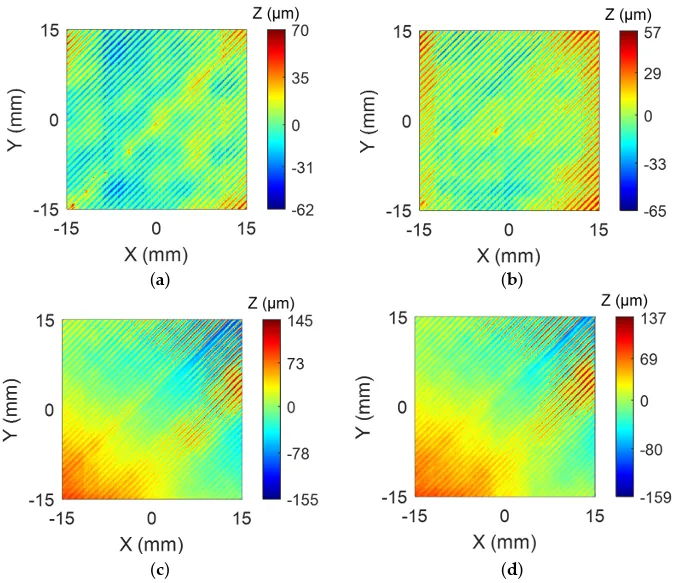
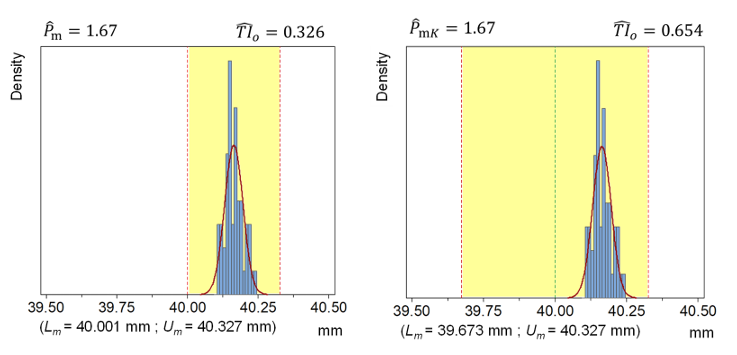
Abstract Dimensional quality is still a major concern in additive manufacturing (AM) processes and its improvement is key to closing the gap between prototype manufacturing and industrialized production. Mass production requires the full working space of the machine to be used, although this arrangement could lead to location-related differences in [...]
Journal
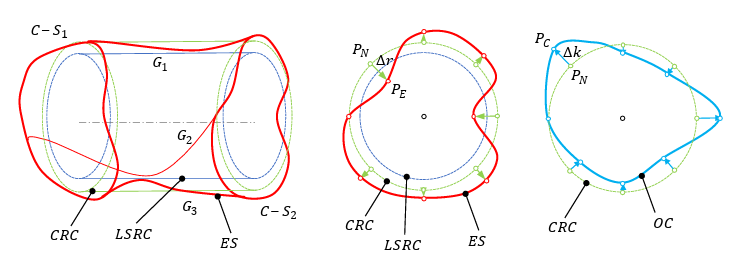
Abstract The dimensional and geometrical quality of additively manufactured parts must be increased to match industrial requirements before they can be incorporated to mass production. Such an objective has a great relevance in the case of features of linear size that are affected by dimensional or geometrical tolerances. This work [...]
Journal
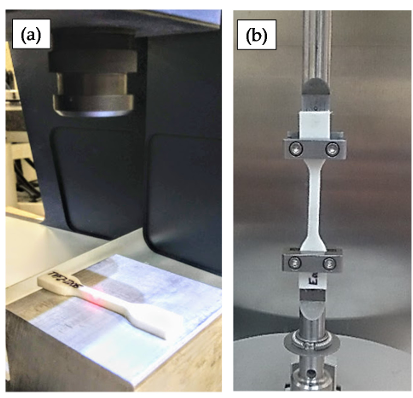
Abstract Material extrusion based additive manufacturing is used to make three dimensional parts by means of layer-upon-layer deposition. There is a growing variety of polymers that can be processed with material extrusion. Thermoplastic polyurethanes allow manufacturing flexible parts that can be used in soft robotics, wearables and flexible electronics applications. [...]
Journal
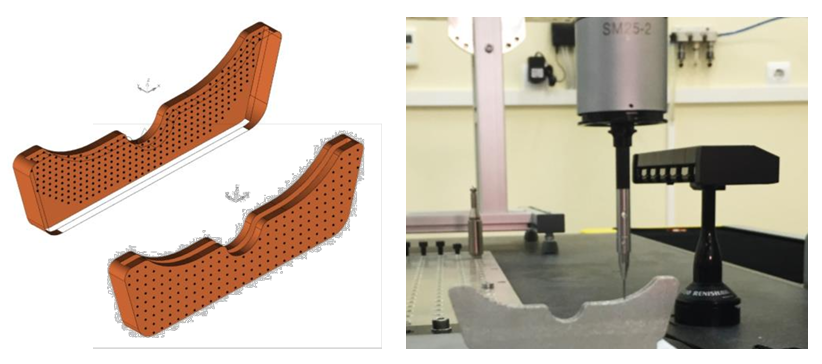
Abstract In order to compete with traditional manufacturing processes, Additive Manufacturing (AM) should be capable of producing medium to large batches at industrial-degree quality and competitive cost-per-unit. This paper proposes a systematic framework approach to the problem of fulfilling dimensional and geometric requirements for medium batch sizes of AM parts, [...]