
Artefacts for volumetric error determination on additive manufacturing machines: a case study
Abstract
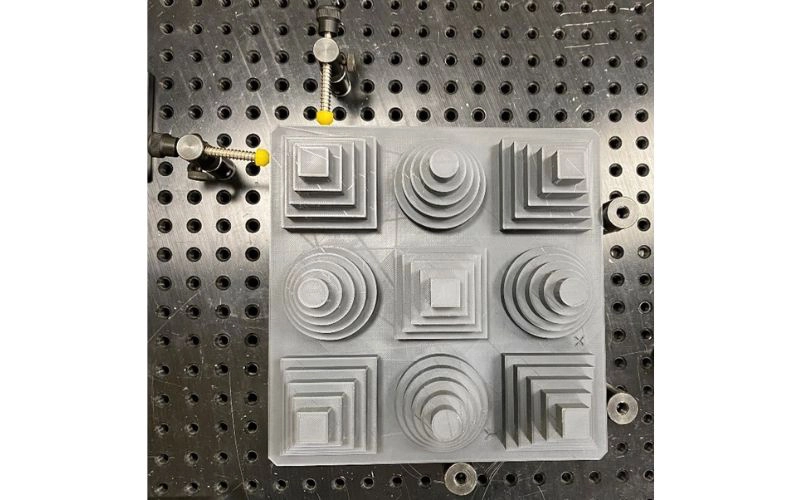
In this Project, the feasibility of using artefacts manufactured using additive manufacturing techniques to determine the geometric errors of the machines themselves has been analysed. To this end, a procedure for determining these errors was developed and applied to a real case study.
The review of the state of the art showed that, although several studies have addressed the use of artefacts manufactured using additive manufacturing techniques, only a limited number have focused specifically on the determination of machine geometric errors. In general, these artefacts are used to assess the achievable manufacturing quality of specific geometries. Therefore, the design of the proposed artefact was developed with limited specific references from previous studies.
The developed artefact makes it possible to determine the geometric errors of the machine and, through the use of virtual points, to reduce the influence of certain effects inherent to the manufacturing process that could otherwise alter its geometry.
Following the manufacture and measurement of the artefact, and after addressing various issues that arose during the process, a geometric error model was implemented. The model considers the most relevant errors, mainly those associated with inaccuracies in the assembly of the guiding elements and with the transmission ratios of the machine’s drive systems.
Subsequently, the model was applied to a validation part different from the artefact used for its identification. The results showed that its application can satisfactorily improve the geometric quality of the part, thereby demonstrating the usefulness of the developed procedure.
Finally, the artefact made it possible to detect deviations in the diameters of its cylinders. These deviations, which are attributable to the manufacturing process itself rather than to machine geometric errors, do not affect the determination of the model due to the use of virtual points. Their analysis is therefore proposed as a potential area for future work.
Thesis data
Author:
Fernández Alonso, Jorge
Supervisor/s:
P. Zapico
Related project:
DPI2017-83068-P
Date:
22/07/2021


