
Degree Thesis
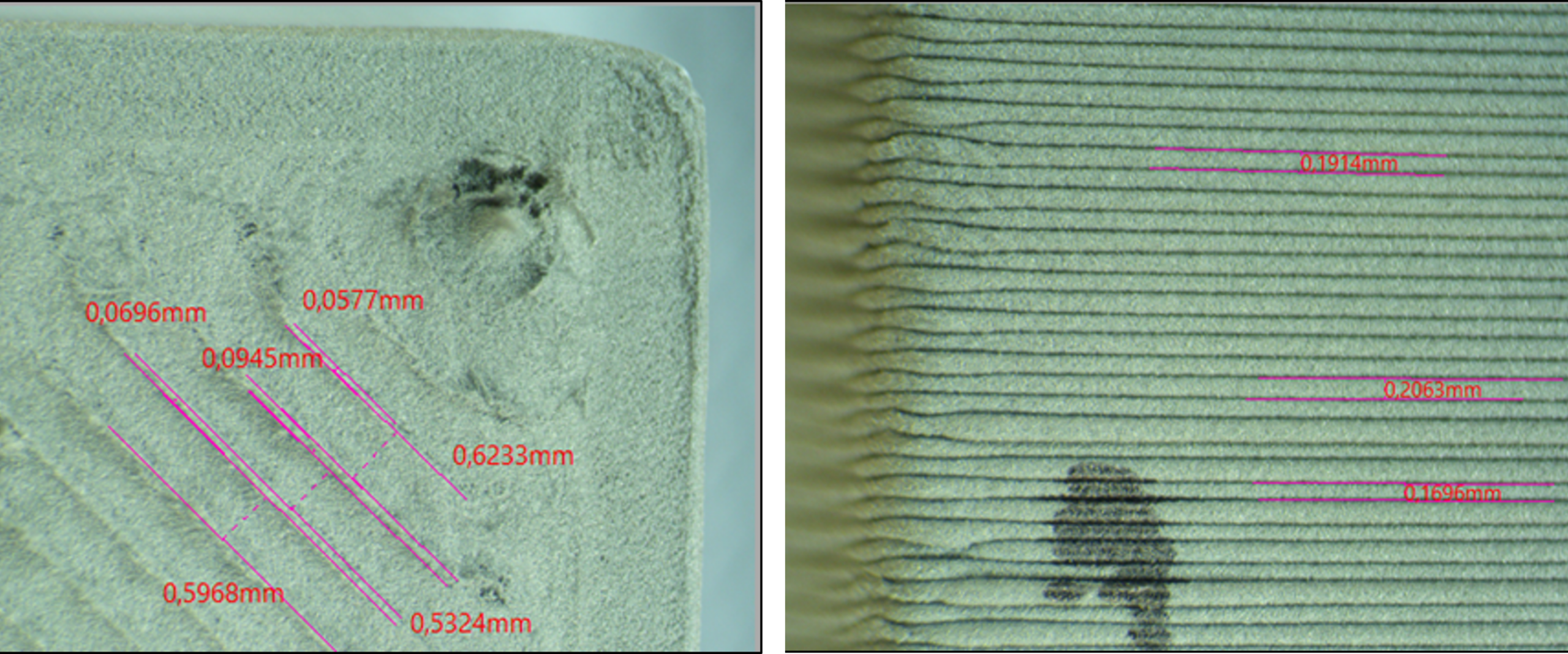
Abstract This project analyzes the quality of parts manufactured using Metal Material Extrusion (Metal MEX), with the aim of identifying the most influential printing parameters. The study focuses on examining the quality of green parts produced using different combinations of printing parameters, using a trinocular microscope. The quality of the [...]
Degree Thesis
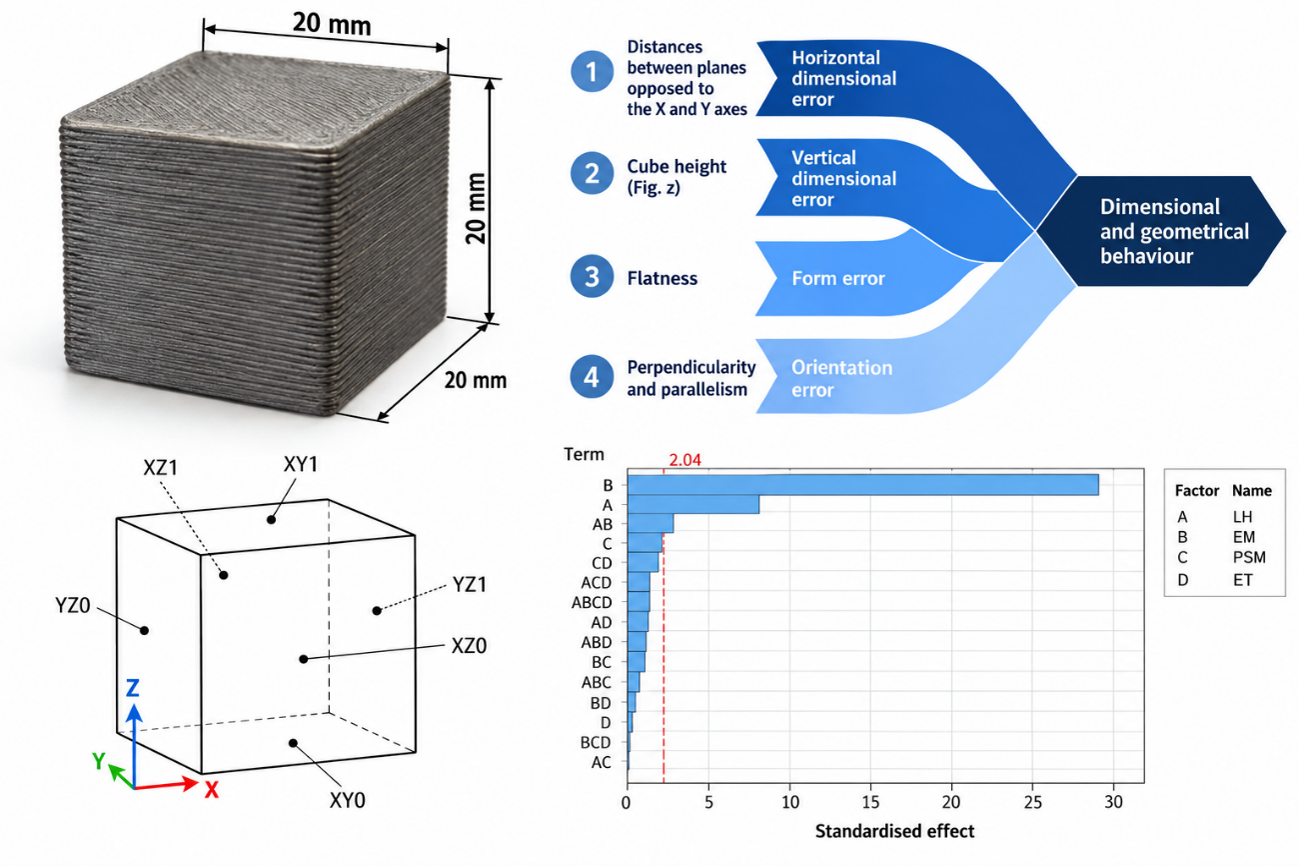
Abstract Metal material extrusion (MEX/M) is an accessible alternative for manufacturing metal components, although its industrial application is constrained, among other factors, by the dimensional and geometrical accuracy achieved. This Final Degree Project was carried out within the framework of the AEMMEX research project, led by the EPMAN group at [...]

Degree Thesis
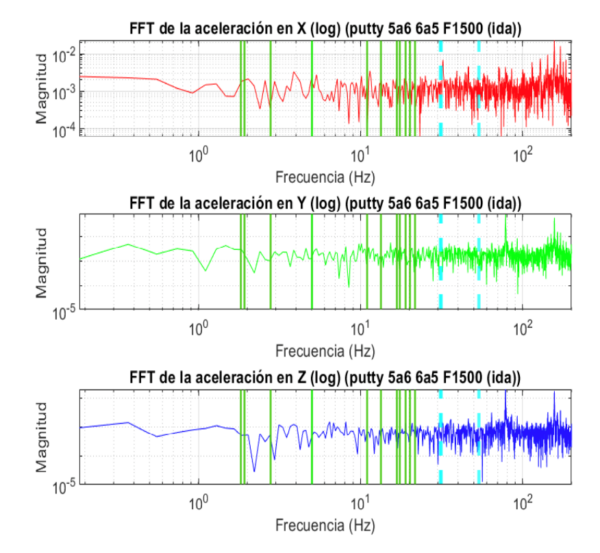
Abstract This project focuses on the development and validation of a vibration acquisition and analysis system for MEX (Material Extrusion) 3D printers, using MEMS (Microelectromechanical Systems) accelerometers and microcontrollers such as Arduino or ESP32. By implementing signal processing techniques, including the Fast Fourier Transform (FFT) in MATLAB, the project aims [...]
Degree Thesis
Abstract This project investigates how to adapt a ‘second-skin’ design to a surface digitized in 3D using Blender. As a practical application, it involves designing, manufacturing and assembling a second-skin device for the hand that incorporates an inertial sensor, allowing hand movements to control a digital object. EM3D is used [...]
Degree Thesis
Abstract This project investigates how the dimensional and geometric quality of features manufactured by thermoplastic filament extrusion (MEX/P) varies when using a low-cost 3D printer (Anycubic Viper). It reviews and optimizes the printing parameters through general-purpose tests and standard test specimens. An experimental plan and test geometry are then developed [...]
Degree Thesis
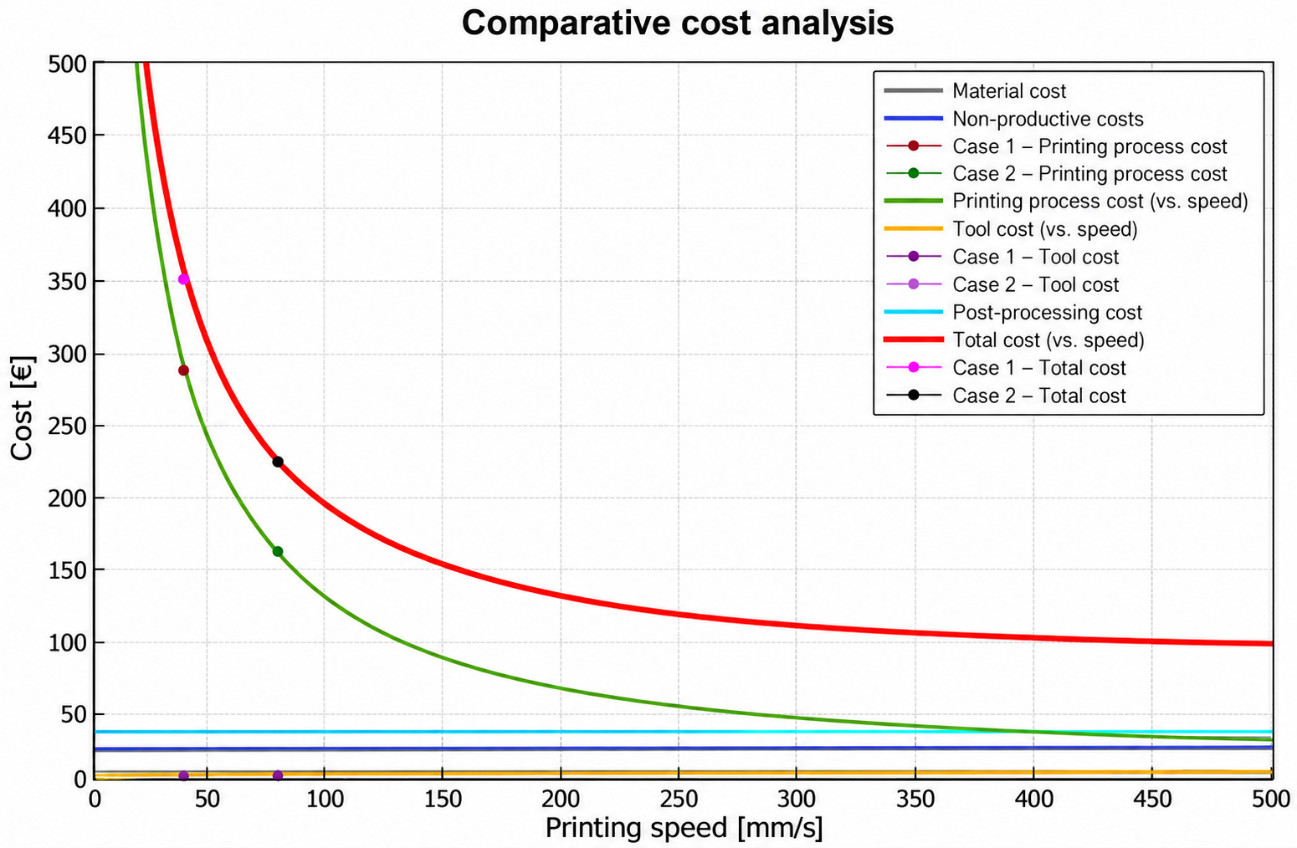
Abstract Material extrusion of metallic filament (MEX/M) is a potentially low-cost alternative for manufacturing metal components, as it uses equipment similar to that employed in polymer 3D printing. However, assessing its economic viability requires consideration not only of material deposition, but also of auxiliary operations, component wear and subsequent debinding [...]
Degree Thesis
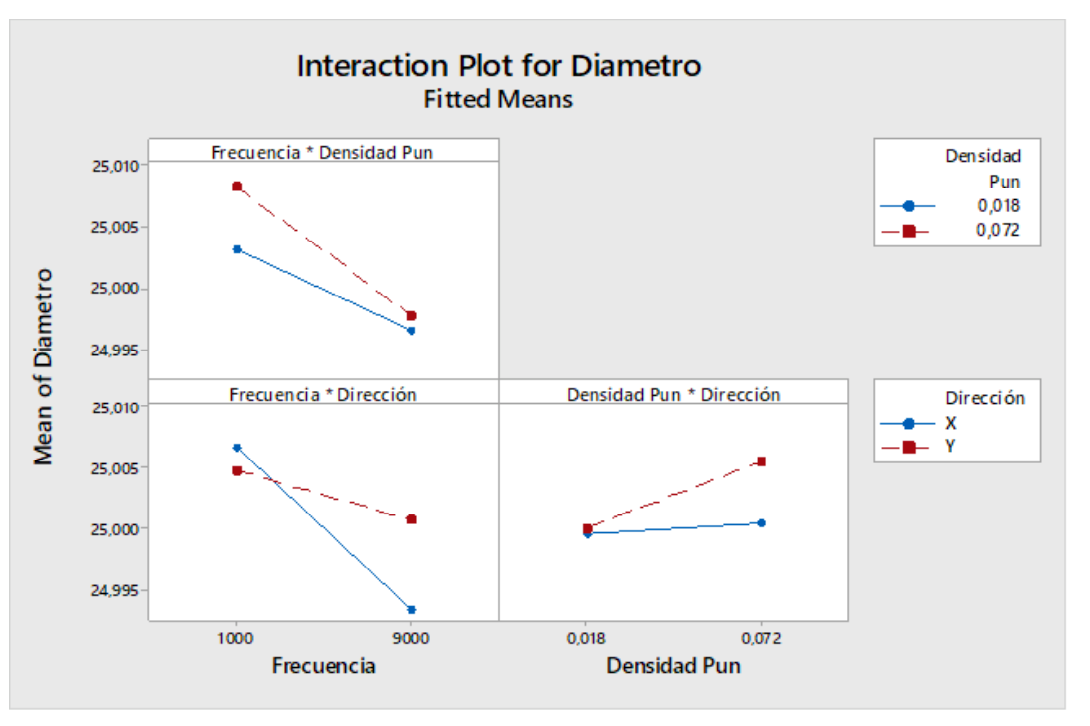
Abstract This project analyses the dimensional accuracy of parts manufactured using material extrusion (MEX) and investigates improvements achieved by compensating for the original geometry. It focuses on cylindrical surfaces, one of the few geometries for which tolerance specifications can be established under ISO 286-1, in a series-production scenario that justifies [...]
Degree Thesis
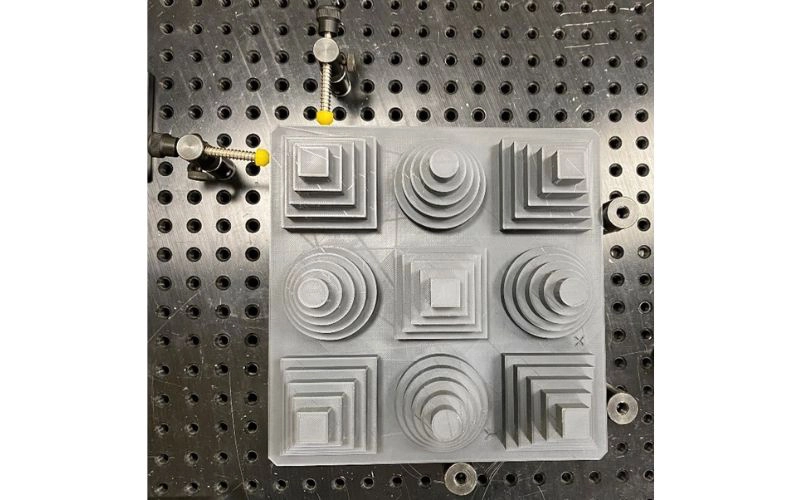
Abstract In this Project, the feasibility of using artefacts manufactured using additive manufacturing techniques to determine the geometric errors of the machines themselves has been analysed. To this end, a procedure for determining these errors was developed and applied to a real case study. The review of the state of [...]
Degree Thesis
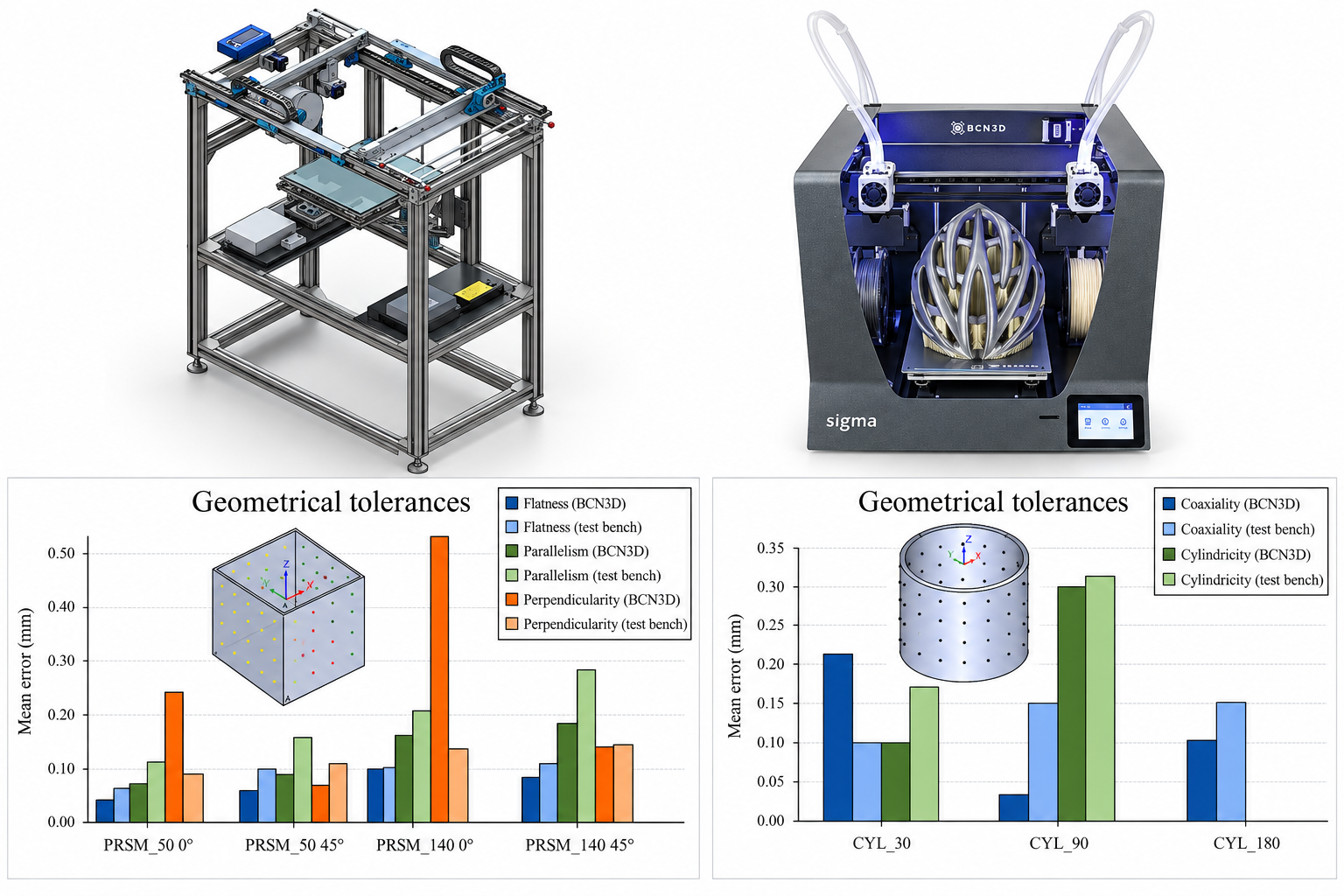
Abstract In this project, cubic and cylindrical parts were manufactured using two FFF (Fused Filament Fabrication) machines: a BCN3D machine and a test bench developed by IPF. The work was structured into two phases: the first focused on selecting and adjusting the manufacturing parameters through visual and metrological inspection of [...]
Degree Thesis
Abstract Based on the results obtained, it can be concluded that the choice of the parameters (M), (T) and (S_f) significantly affects the quality of the detected contours, and that their optimal combination depends on the algorithm used and the characteristics of the image. The contrast between the target layer [...]
Degree Thesis
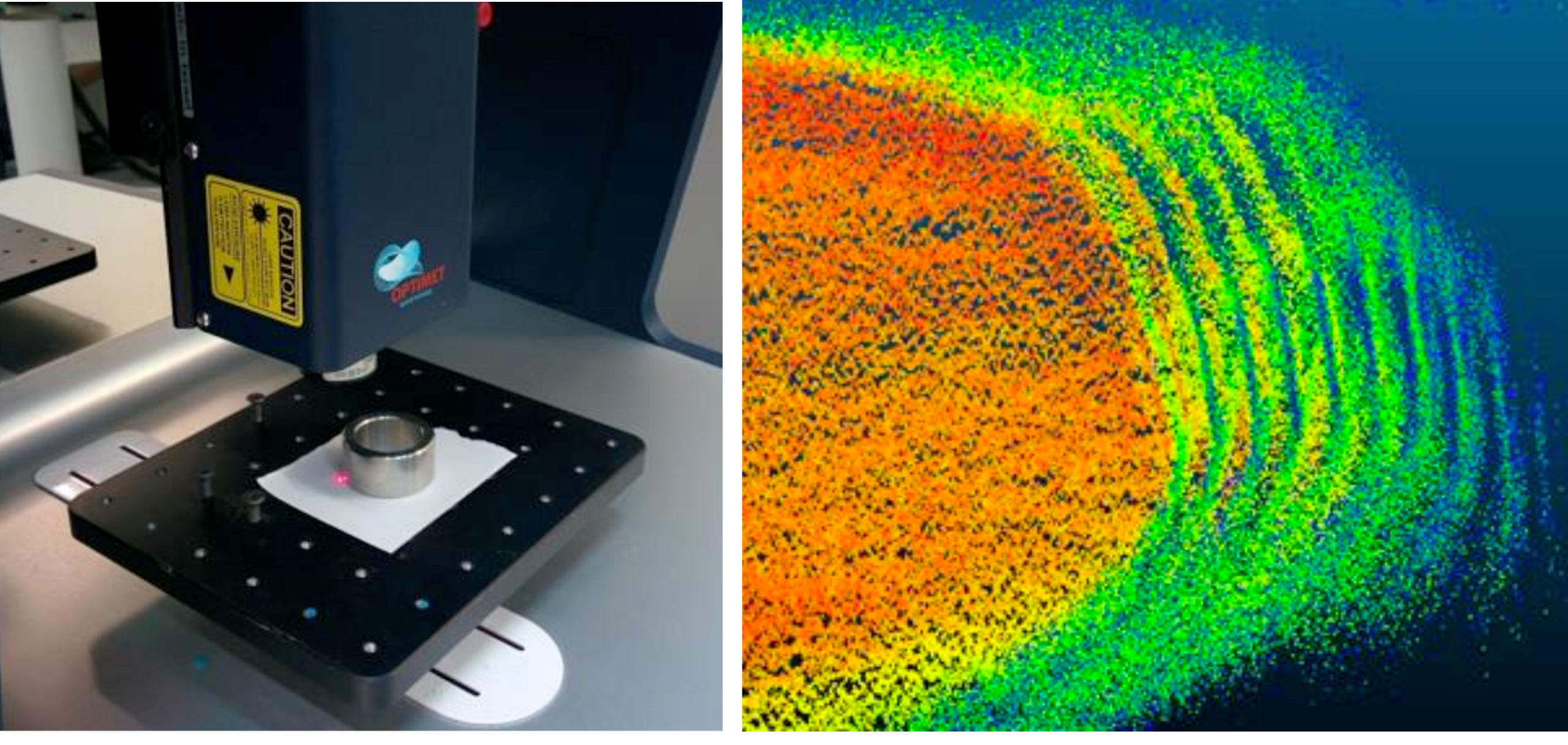
Abstract This project investigates the performance of non-contact scanning technology based on the principle of conoscopic holography when measuring parts with sharp, step-like edges. The analysis identifies the main factors that contribute to defects in point clouds and determines the average defect size under the best- and worst-case conditions. Among [...]
Degree Thesis
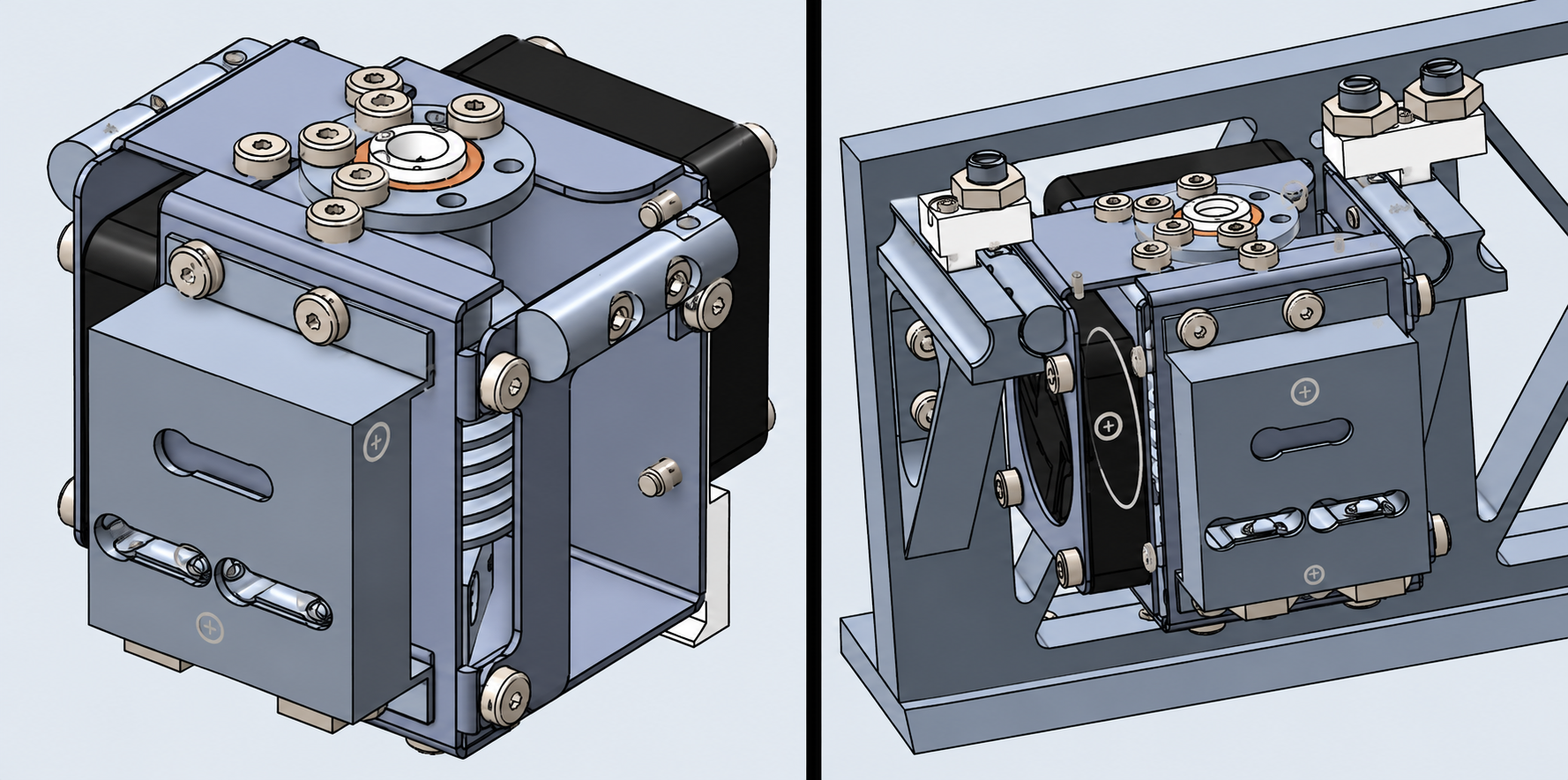
Abstract The aim of this project was to design an automated storage and nozzle-changing system for a multi-filament FFF 3D printer. Following an analysis of additive manufacturing technology and the main automatic tool-changing systems currently available, a solution was developed based on a modular storage unit and a coupling carriage [...]
Degree Thesis
Abstract This Project has analysed the potential of bimaterial structures partially manufactured using additive manufacturing processes for applications in soft robotics. To this end, 12 joint configurations were designed and manufactured, combining a rigid material (PLA), manufactured using FFF, with a flexible material (Elastosil), produced by moulding. The different configurations [...]
Degree Thesis
Abstract This study evaluated the capability of conoscopic holography (CH) to digitise and geometrically analyse PLA surfaces of different colours and thicknesses, manufactured using FFF. The results show a clear influence of the material colour on the quality of the digitisation. The blue specimens provided the best results, allowing all [...]
Degree Thesis
Abstract In this Project, tensile and shear tests were carried out on additively manufactured parts using both rigid and flexible materials. The results show that the 0° and grid configurations provide the highest strength in both types of test. In addition, the incorporation of overlap increases the failure load and [...]
Degree Thesis
Abstract The results obtained show that lattice structures are a viable alternative for reducing the weight of additively manufactured parts while maintaining adequate mechanical performance. The design parameters, particularly the distance between nodes and the bar diameter, have a significant influence on the behaviour of the structures. A smaller distance [...]
Degree Thesis
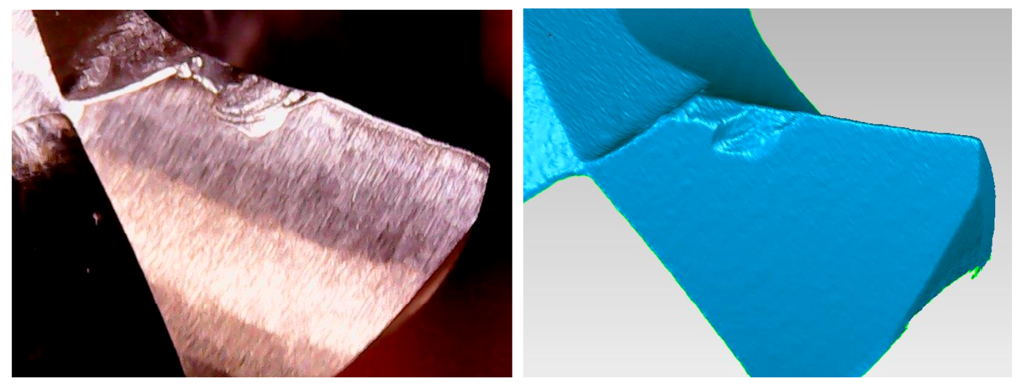
Abstract This project investigates the potential of conoscopic holography for detecting and measuring wear in cutting tools, specifically drill bits. A key part of the work involves designing a fixture to hold and orient the drill bits appropriately, facilitating their 3D scanning and the subsequent assessment of wear. The point clouds [...]
Degree Thesis
Abstract The main objective of this project is to determine whether scanning speed influences the results obtained using conoscopic holography. To this end, several experiments were conducted on two machines that can be equipped with this sensor: the ConoScan 4000 and the DEA Swift. The experiments aimed to assess whether [...]
Degree Thesis
Abstract This project develops and evaluates a procedure for characterizing turning tool wear using non-contact 3D data acquired with a conoscopic laser sensor (ConoPoint-10) mounted on a coordinate measuring machine (CMM). The scope is limited to flank wear on uncoated, chip-breaker cutting inserts. Preliminary tests using point-by-point scanning establish the [...]
Degree Thesis
Abstract Cutting tool wear degrades surface finish and machining tolerances and usually requires the tool to be removed for measurement. This project develops a non-contact method for measuring insert wear using point clouds acquired with a conoscopic holography sensor. The documentation includes an assessment of point cloud quality and the [...]

Engineering for Precision Manufacturing
Department of Construction and Manufacturing Engineering
Edificio Departamental Oeste, 5, Campus de Gijón, 33203 Gijón, SPAIN
Email: info@epman.es / Phone: +34 985182062 / +34 985182442


Diseño y desarrollo web realizado por Webservi.es | Todos los derechos reservados | Política de privacidad | Aviso legal | Política de cookies