

Pablo Zapico García
Senior Lecturer
+34 985182217
ORCID code: 0000-0001-8055-8650
Short CV:
Pablo Zapico obtained an MSc in mechatronics and a PhD from the University of Oviedo in 2014 and 2017, respectively. From 2018 to 2020, he worked as a post-doctoral researcher in the AM field in the Department of Mechanical, Informatics and Aerospace Engineering at the University of León. In 2020, he joined the Department of Construction and Manufacturing Engineering at the University of Oviedo as Assistant Lecturer. His current research is focused on non-contact inspection applied to manufacturing engineering, especially aimed at the integration of non-contact technologies in AM machines. He has participated in several research projects, and the obtained results have been reflected in numerous publications in journals of high impact as well as in national and international conference presentations.
Projects,Public Funding Projects
Abstract The project explores the possibility of using additive manufacturing (AM) of ceramic materials to produce ceramic tools for metal cutting. Among other advantages, this concept aims to manufacture ceramic tools with optimized cutting geometries, provide them with customized texturing of the cutting surface, generate [...]
Private Funding Projects,Projects
Abstract In this project, EPMAN provided consulting and technical assistance to Laboral Centro de Arte y Creación Industrial in the field of artistic and industrial creation. The work involved analyzing the needs identified by resident and visiting artists, as well as by the center itself, [...]
Publications
Abstract This work presents a fused-filament fabrication (FFF) hot end that combines an unrestricted-rotation C-axis with a rectangular-slot nozzle and an induction-heated melt sleeve. The architecture replaces the popular resistive cartridge and heater block design with an external coil that induces eddy-current heating in a [...]
Publications
Abstract Surface quality in material extrusion of polymers (MEX/P) plays a critical role in determining the functional performance of printed parts, especially in components that must work together and in sectors such as medical and aerospace. Predicting surface quality before printing shall be therefore considered [...]

Publications
Abstract Additive manufacturing (AM) has faced challenges in achieving the part accuracy required for industrial adoption. Most research has focused on offline inspection of geometric deviations in test parts. This paper introduces a novel approach to enhance part accuracy and process control in Polymer Extrusion [...]
Projects,Public Funding Projects
Abstract The project aims to develop and optimize the additive manufacturing of metal parts using Metal Extrusion (MEX/M) as an alternative to conventional metal powder-based technologies, with the goal of reducing costs, energy consumption, and the risks associated with the handling of raw materials. The [...]

Projects,Public Funding Projects
Abstract The TEDI project is a 36-month Erasmus+ Cooperation Partnership in Higher Education (KA220-HED) running from September 2024 to August 2027, co-funded with a grant of €250,000. Coordinated by Rzeszów University of Technology (Poland) alongside Kaunas University of Technology (Lithuania) and the University of Oviedo [...]

Projects,Public Funding Projects
Abstract The processes utilized for Additive Manufacturing (AM) production of metallic parts usually entail the use of hazardous feedstocks, expensive production equipment, and high energy consumption. Metal Material Extrusion AM (MEX/M) presents an alternative multi-step approach that addresses these challenges by additively extruding polymer-metal composite [...]
Publications
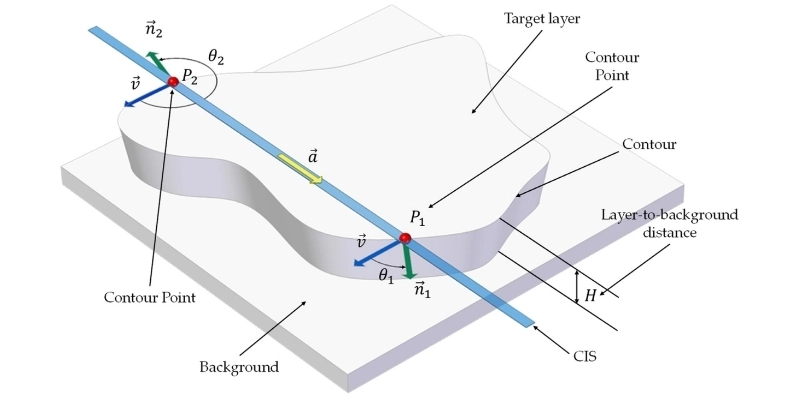
Abstract: The industrial adoption of material extrusion of polymers (MEX/P) is hindered by the geometric quality of manufactured parts. Contact image sensors (CISs), commonly used in flatbed scanners, have been proposed as a suitable technology for layer-wise characterization of contour deviations, paving the way for [...]
Publications
Abstract The variety of equipment implementing laser triangulation technology for 3D scanning makes it difficult to analyse their performance, comparability, and traceability. In this study, three laser triangulation sensors arranged in different configurations are analysed using high precision spheres made of different materials and surface [...]


